
Unknown's avatar

About Graham Catt

Graham Catt is a South Australian poet and writer of short stories. Sometimes he takes photos.

Excerpts from ‘A Field Guide to the Lesser-Known Superheroes’

Since the 1930s, the stories of superheroes have evolved into an entire genre of fiction, dominating the American comic book, and crossing over into other media, such as television and film.

We’ve all heard of Spiderman, Batman and Wonder Woman, but what of those lesser-known superheroes, the ones that don’t get all the media attention and public accolades?

Here is a preview of Max Funt’s A Field Guide to the Lesser-Known Superheroes, due for release in early 2007.

Captain Lint

Captain Lint looks and behaves like an ordinary human being, but has the uncanny ability of attracting lint. With a simple wave of his arm he can summon lint from a coat pocket half-a-mile away. Unfortunately, there is little call for such powers, and Captain Lint finds himself limited to cleaning jobs and carnival appearances. He is also rendered powerless by a proximity to melons.

Pelicanman

Is it a large and clumsy bird? Is it a small and clumsy plane? No, it’s Pelicanman! Faster than a speeding cockroach. Able to leap small puddles in a single bound. Apart from his ability to fly, Pelicanman can carry large quantities of fish in his enormous mouth. Unfortunately, this makes him less than popular at superhero parties and other social gatherings. (See also Codman, Eelboy and Slugwoman.)

The Pointer

The Pointer is fearless. He will point at anything – shark, bear, tiger, moose. Once, on assignment in the wilds of Siberia, this brave superhero pointed at several thousand trees, sixty-five rabbits, fifteen peasants and a badger. The Pointer is renown for his commitment to duty, in fact, it is said that he even points in his spare time.

Blabbergirl

When Trudy Ball was a baby she swallowed an experimental radio transmitter. Miraculously, she escaped serious harm, but discovered that her voice had acquired superhuman qualities. She can talk non-stop for several months at a time, speak backwards in over a dozen languages, and project her voice across continents and oceans. While her super-hero duties have reduced of late, Blabbergirl has acquired a steady job on breakfast radio.

The Invisible Chair

In the blink of an eye, this chair can make itself invisible. A frustrating addition to any game of musical chairs and a comical party piece, although its status as a super-hero has been debated.

Napkinman

A childhood accident left Stan Ovary with a bizarre and unique gift – the ability to fold napkins at the speed of light. His powers are highly sought by caterers and wedding planners. Unfortunately, this is the only activity with which he has even a semblance of coordination, as even a simple walk confounds poor Stan. (See also Poodleman, Tulipboy and Bubblegirl.)

The Woman with Three Eyebrows

Strange, but true. This woman has two eyes, but three eyebrows, the third hidden on the back of her head, disguised by surrounding hair. The Woman with Three Eyebrows is a skilled vegetable peeler, adept at sharpening pencils and can nearly count to twelve.

Puddleboy

At an early age, Garth Diddle learned he had the ability to create puddles by simply dribbling water out of his mouth. He then learned to make puddles by pouring liquid directly onto the ground. While the use for such a talent in fighting crime is debatable, Puddleboy has developed quite a following among taxidermists and stamp collectors.

Atomic Artichoke

The result of a bizarre accident in a nuclear power station, the Atomic Artichoke was granted strange and unique powers. Unlike an ordinary artichoke, this vegetable can sing, play the ukelele and talk to cows. Unfortunately, it was not given the power of sight, and can only move around with the aid of a seeing-eye dog.

Craig

By day, he is known as Mighty Man, a being with superhuman powers of strength and speed. But at night, Mighty Man transforms into the extraordinarily ordinary Craig. He can walk almost 5 kilometres in one night, lift heavy bags, and draw circles and squares quite quickly. The only things that can stop Craig are a locked door, a length of rope or a pointed stick.

Howard the Nose

While working in a uranium mine, Howard Bent accidentally inserted a piece of radioactive material into his left nostril. Howard was left with a mild stutter and unable to father children, but has the ability to produce large quantities of radioactive mucus. (See also Gelignite Judy, The Leg and The Human Dumpling.)

The Bionic Sausage

After an incident involving a jet liner and packet of chewing gum, this sausage was considered all but lost. However, a team of surgeons and scientists were able to recover some of its remains, and created bionic replacements for the missing pieces. The result is the most powerful sausage in the history of the planet, able to withstand the hottest barbecue plate and the spiciest Tabasco sauce.

Biscuitman

This superhero’s career was cut short when, having transformed into an oatmeal cookie, Biscuitman was eaten by a goat. (See also Broccoligirl, Mr Sandwich and Captain Cheddar.)
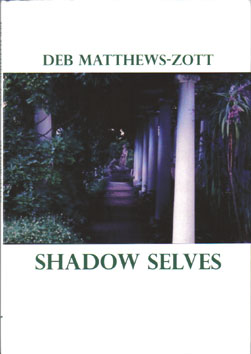
Deb Matthews-Zott – Guest Poet

This month I am very pleased to present the poetry of Deb Matthews-Zott.

Deb first read at Friendly Street in 1989. She was treasurer of Friendly Street Poets from 1997-1999, and co-edited the anthology # 23, Beating Time in a Gothic Space. Her collection Shadow Selves was published by Ginninderra Press in 2003. She is currently working on a new collection of poems ~ Learning Meditation.

Copies of Shadow Selves can be purchased directly from Ginninderra Press.

Guitar

I have the body of a guitar.
When I lie down to meditate
my neck is straight
I clear my mind
of things I’ve fretted about
let go my strings of attachment.

My soul is a sound box
it draws in the songs of birds,
the pulsation of insects,
the gentle movement of breezes,
transforms the vibrations of nature
into meditation music.

I breath in
breath out
repeat the cycle
creating chords of calm
to lift me above the physical
resonating with riffs of bliss
tuned to perfection.

Red

The day her boyfriend came home from gaol
She spilled out onto the quiet street
In a sheer red dress which showed
Her flattened breasts, her bones.
And the mad edge of her laughter
Held itself to the neighbour’s throats.

٭

They all wished she would go back inside
And lie on her bed with a bottle of gin,
Or sit in a haze on the lounge-room floor
Flicking her lighter at a pack of burning cards.

٭

The street could not contain
The riot of her voice;
Her stumbling red shape;
Her bare white feet on their bitumen road.

They preferred the hysteric of her scream
Bouncing off inner walls
Of crushed and shattered plasterboard.
There a fist or two,
There the crater of a skull.
A whole panel gone
Where he pushed her body through.

٭

Her ecstasy lasted a day or two.
Then, in the middle of a night,
They screeched in the yard
Like a pair of ill-matched cats
Tearing at cloth; at hair and skin,
Drawing each other’s animal blood.

previously published in Cordite, Friendly St. and Shadow Selves

Lava and Rain

the lava sun burns and runs
concrete is volcanic ash

there’s a fire
and the sprinklers
are on heat

in the shade house, out back,
green corrugations distil light
to feeble shadow

a honey-eater drips
from the shade cloth sky
to steal a drink

I lie naked on a sofa
that’s drawn its own heat
and compete with silent monstera leaves

to catch the drift of liquid mist
the fragile cool
of fine green rain.

previously published in Shadow Selves


Copyright


Please note that all material appearing on this website is protected under Copyright laws and may not be reproduced, reprinted, transmitted or altered in any form without express written consent of the author.

The Departed – a Review


Martin Scorsese has made historical dramas, biopics, thrillers, comedies, even a musical. But he is best known for his crime films like Mean Streets, Goodfellas and Casino. He seems most at home when exploring the darker elements of humanity – violence, corruption, obsession, and the abuse of power. Scorsese’s latest film – The Departed – marks a return to the crime film, only this time he examines both the criminal and the crime fighter.

Based on Infernal Affairs – a B-Grade Hong Kong crime film – The Departed tells the story of two men – Colin Sullivan (Matt Damon) and Billy Costigan (Leonardo Di Caprio). Both grow up on the ‘wrong’ side of town, surrounded by poverty and crime. Both have a close association with criminals; Costigan’s father was a renowned thug, while Sullivan was virtually ‘adopted’ by Irish-American gang leader, Frank Costello (Jack Nicholson). Both join the police force, Costigan in an effort to prove himself and overcome the deficiencies of his background, Sullivan in order to provide mentor Costello with valuable inside information. The twist comes when Costigan is asked to go ‘undercover’ and infiltrate Costello’s gang.

The movie follows Sullivan and Costigan as their positions within the respective organizations become compromised, and the threat of exposure increases. To complicate matters, both Sullivan and Costigan become involved with the same woman (Vera Farmiga), a police psychologist initially charmed by Sullivan, but later drawn to Costigan. Both men grow desperate as the tension and body count rises, and the film hurtles towards its bleak and bloody conclusion

The predominantly male cast is excellent. Jack Nicholson relishes his role as crime boss, Frank Costello, without turning the character into a cartoon. Matt Damon impresses as the duplicitous Colin Sullivan, while Leo Di Caprio shines as Billy Costigan, the undercover cop who must keep quiet while witnessing extortion and murder. It’s Di Caprio’s third Scorsese picture in a row, and this is his best performance of the three. The supporting actors like Martin Sheen, Ray Winstone, Alec Baldwin and especially Mark Wahlberg as the foul-mouthed detective, Dignam, are all terrific.

The weakest character is, unfortunately, the only female role of any substance. Vera Farmiga’s Madolyn is a breath of fresh air amid all the swaggering men, but her character is both unlikely and unnecessary.

The dialogue is gritty and realistic, filled with a caustic wit and grim humour (although I couldn’t help but cringe at some of the macho ‘ball-breaking’). And, as is usual for a Scorsese movie, the soundtrack is spot on, and includes popular songs by Pink Floyd and the Rolling Stones, as well as a score by Howard Shore.

At 152 minutes, The Departed is a long film. But I got the impression that a great deal was cut out of the movie, for it seemed occasionally disjointed, with sudden shifts in mood or scene, while some minor plot threads are not developed or simply disappear.

For the most part, however, this is fabulous filmmaking. The Departed is packed with memorable moments and terrific performances. It’s Scorsese’s best film for some time.

Pieces Of The People We Love – a Review

Towards the end of the post-punk era of 1978-1984 many of the original punks and post-punks moved onto the dance floor and into the pop charts. Bands like Human League, ABC, Heaven 17, Cabaret Voltaire, Scritti Politti, New Order, and even Gang Of Four, were releasing radio-friendly dance music. It sort of makes sense that today’s post-punk revivalists might want to make a similar move.

New York’s The Rapture took a step in this direction with their 2003 single ‘House Of Jealous Lovers’, a searing slab of disco-noise. Their latest release, ‘Pieces Of The People We Love’, takes the ‘Lovers’ sound, and reshapes it into an album’s worth of fabulously funky pop tunes, reminiscent of New York’s ‘mutant disco’ of the early 80s, the minimalist sound of bands like Bush Tetras and Liquid Liquid, and most of all, Talking Heads, in particular, their 1980 album ’Remain in Light’.

The song most likely to draw comparisons with Talking Heads is album centrepiece ‘Whoo! Alright Yeah… Uh Huh’. This song sets the sonic template for the album – prominent bass, flickering guitars, bleeping and burping synths and a multitude of beats – all intricately interwoven over a steady dance groove. Lyrically too, the song reveals the band’s ‘manifesto’ for the album. Or, should I say, its ‘anti-manifesto’.

People don’t dance no more
They just stand there like this
They cross their arms and stare you down
And drink and moan and diss

‘Pieces Of The People We Love’ turns its back on the serious indie-types and their ‘crap rock poetry’ and celebrates the pop song. Elsewhere the lyrics seem provocatively simplistic – from the ‘Na-na-na, Na-na-na’ of the title track to the ‘love/above, kept/wept’ rhymes of ‘The Devil’.

In ‘First Gear’ – a kind of synth-funk driving song – singer, Luke Jenner, delivers a series of dopey sex-as-car/driving images before the backing vocalists join him in the ‘My My My My Mustang Ford’ refrain. It’s deliriously silly, as is the orgasmic yelp in the aforementioned ‘Devil’, and the Tom Tom Club-like call-and-response vocals of ‘Whoo! Alright Yeah…’

But while the emphasis is on the beat rather than the brain, these songs aren’t exactly slick disco retreads. There’s enough noise and warped sentiment to give them a little edge. ‘The Sound’, for example, features a wall of clattering rhythms and buzzing electronics, while opening track ‘Don Gon Do It’ embellishes the bouncing synth-bass and singalong chorus with screeching guitars.

Another highlight is ‘Down For So Long’. Like ‘Whoo! Alright-Yeah…’ it pieces together twitching electronics with intricate rhythm sounds to create something that wouldn’t sound out of place on Talking Heads’ ‘Speaking in Tongues’. (Even its vague references to ‘the man upstairs’ echo the lyrical preoccupations of David Byrne.)

The less successful tracks are those that stray from the pop-funk model. ‘Calling Me’ is built around a slower, shuffling rhythm and a tune that lacks the celebratory feel of the rest of the album. Closing track ‘Live In Sunshine’ suffers from a similar problem, but manages to overcome the slow pace by projecting an appropriately ‘sunny’ outlook with its ringing guitars and gospel-flavoured backing vocals

‘Pieces Of The People We Love’ is the type of album that is becoming increasingly rare. It dares to bridge the gap between the ‘popular’ and the ‘alternative’, a reminder of the days when it was acceptable for a ‘serious’ band to play dance music.

Excerpts from ‘Working with Concrete’

Many people have sought to understand the amazing variety of images produced by the sleeping brain, from ancient philosophers and fish merchants, to psychoanalysts, brain surgeons and interior decorators. Here is but a sample of the interpretations I have collected over a lifetime of study, soon to be published as Working with Concrete and other Pastimes of the Subconscious (The Third Ear 2006).

Bacon

The appearance of bacon in your dreams might indicate a desire to sleep with barnyard animals. Bacon can also be a warning against skin disorders and genital warts.

Custard

Custard is usually associated with sexuality or death. But a pocket filled with custard suggests sudden wealth, while swimming in custard means you will develop a fondness for gravel.

Porcupine

The appearance of a porcupine generally indicates good luck. However, if the porcupine is wearing sunglasses or carrying an umbrella, you should beware of tall bow-legged women.

Underwear

The appearance of socks or stockings usually suggests a desire for secrecy. Bras are associated with an interest in poultry farming, while underpants warn against antelopes and beer.

Earwig

Freud was convinced that the earwig symbolised a fear of watercress, however, some contemporary thinkers feel that the insect may indicate a talent for papier-mâché or martial arts.

Astronaut

An astronaut may appear as an expression of the dreamer’s interest in water sports.

Beetroot

For some people, beetroot is associated with facial hair and carbuncles. For others, it may appear as a nostalgic symbol of childhood diseases or a warning against open-toed footwear.

Pancakes

The appearance of pancakes in your dream is generally good, suggesting money and nice teeth. However, if you should dream of sleeping with a pancake you may become allergic to magnets.

Butcher

The butcher often appears in dreams offering heavily discounted chicken giblets. Rather than signifying generosity, the butcher might actually be symbolic of a desire to collect stamps or cook Mexican food.

Sausage

A longing for oral sex may be expressed in the dream imagery of a sausage placed on the shoulder or upper lip. However, a flying sausage may symbolise a minor raffle win.

Hovercraft

According to the Jungian view, riding on a hovercraft, or any other form of public transport, suggests that the dreamer is becoming boring or predictable. Therefore, a hovercraft dream can alert us to the need for a new hairstyle, penis enlargement or breast implants.

from Working with Concrete and other Pastimes of the Subconscious (The Third Ear 2006)


Copyright

Please note that all material appearing on this website is protected under Copyright laws and may not be reproduced, reprinted, transmitted or altered in any form without express written consent of the author.

One Minute Music Reviews 3

An overview of some of the most interesting albums to have come my way in the last three months.

Bonnie ‘Prince’ Billy – The Letting Go

Recorded in Iceland, ‘The Letting Go’ sparkles with a crystalline clarity. Oldham’s hoarse warble is augmented by a string quartet and Dawn McCarthy’s backing vocals to beautiful effect. Tracks like ‘Cursed Sleep, ‘Love Comes To Me’ and ‘The Seedling’ already sound like classics. (4.5/5)

The Dears – Gang Of Losers

The Dears’ third album might not have the immediacy of ‘No Cities Left’, but it is a complex, ambitious and ultimately rewarding collection of songs. The lyrical themes are big and broad – love, fear, rejection, racism and forgiveness, while the music is almost cinematic in scope. For full review click here. (4/5)

Figurines – Skeleton

Scandinavia continues to produce quality pop music. This four piece sound a lot like Modest Mouse or The Shins but actually come from Denmark. All fuzzy guitar and power-pop hooks, the album’s highlights include ‘The Wonder’, ‘Ambush’ and ‘Silver Ponds’. (3/5)

Herbert – Scale

Highly regarded UK producer Matthew Herbert’s latest project combines disco beats, jazzy horns, sumptuous strings and blue-eyed soul singing. And if that isn’t enough, he also manages to throw in some political commentary. It’s an extravagantly ambitious album that effortlessly glides from torch song to dance groove and back again. (4/5)

The Knife – Silent Shout

‘Silent Shout’ is not a ‘happy’ record and it’s not always a pleasure to listen to, but The Knife have successfully created their own unique sound world, with its own languages, landscapes and characters. Many artists have such an aim, but few achieve it with such style and originality. For full review click here. (3.5/5)

Grant Lee Phillips – nineteeneighties

The ‘covers’ album concept is rarely a recipe for success. Phillips’ fourth solo is one such rarity. He pays tribute to the artists who inspired him – Pixies, Nick Cave, New Order, Smiths, Echo and the Bunnymen and others – by reinterpreting some of their lesser known tunes. Somehow, he manages to retain the essence of the songs while making them sound exactly like Grant Lee Phillips. (3.5/5)

Scritti Politti – White Bread, Black Beer

‘White Bread Black Beer’ is Scritti’s most diverse album yet, a rich smorgasbord of sounds, from squelchy dub reggae to Beatlesque electro-folk. After three decades in the music business – from post-punk to new pop to hip hop – Green Gartside seems relaxed and comfortable and quite happy doing whatever comes to him. For full review click here. (3.5/5)

The Sleepy Jackson – Personality

The second Sleepy Jackson album is a dreamy, string-soaked affair reminiscent of the Beach Boys, Beatles and 70s AOR. Luke Steele’s meditations on God, the Devil and everything in-between are miniature pop-symphonies, laced with celestial horns and a chorus of angels. (4/5)

Sufjan Stevens – The Avalanche

Stevens blesses us with another 74 minutes of music from last year’s ‘Illinois’ project. While presented as ‘Extras and Outtakes’, songs like ‘Dear Mr Supercomputer’, ‘Springfield’ and ‘Mistress Witch from McClure’ would make any ordinary artist’s A-list. Further proof of Stevens’ genius. (4/5)

Tapes ‘n’ Tapes – The Loon

This Minneapolis quartet has been described by some overenthusiastic music press as this year’s Arcade Fire. One of the few things they do share with the Canadian band is a knack for melding moods and styles – from the rockabilly shuffle of ‘Insistor’ to the scratchy guitar bursts of ‘Crazy Eights’. (3.5/5)

Thom Yorke – The Eraser

Thom Yorke’s debut solo album is an extension of the moody electronica of Radiohead’s ‘Kid A’ and ‘Amnesiac’. It’s as cynical and pessimistic as one would expect, but it is also intimate and even bleakly beautiful. Highlights include ‘Black Swan’ and the grim ‘Harrowdown Hill’. (3.5/5)

Corduroy & Cabbage 9 – Uneasy Rider

I got my first bike when I was about 8 years old. I called it the ‘grasshopper’, partly because it was green, and partly because I believed it could go anywhere, leap over obstacles like a long-legged insect.

Of course, it couldn’t really do this, but that didn’t stop me trying. I used to ride it everywhere. There was plenty of vacant land in our neighbourhood. Between the shopping centre and the high school was an enormous mound of dirt. We used to race around and over it. And on the land that now houses a community centre and a hotel, we used to devise elaborate obstacle courses.

When I was a few years older I was given a red dragster – long wheelbase, banana seat, high back bar, three gears, hand brakes – the works. It looked great, but wasn’t as versatile as the ‘grasshopper’. It was heavy and slow – more of a ‘street bike’ than a ‘dirt bike’. Eventually, I converted it to something a little more ‘hip’. I took off the banana seat and the back bar, and swapped the dragster handlebars for ‘cow horns’ (they were very wide – difficult to get through doorways). I also painted it black and yellow in imitation of the motocross bikes of the time.

My friend, Keith, had done something similar to his bike, and the two of us would cycle around the neighbourhood feeling very cool. We rode into the city (where I was once pulled over for going through a red light) and into the country. Cycling down the Gorge Road past Kangaroo Creek dam was a buzz.

When Keith bought a real motocross bike I was nauseous with envy. I used to spend every weekend watching him either work on his bike, or ride in competition at the local Motocross Club. Every few months he would update his bike. He always had something bigger and better.

Initially, there was no hope of me buying a motorbike. With four young kids, and only one working parent, it was impossible for my family to afford one. We always had to ‘make do’. However, I managed to scrape together a bit of cash by doing a few odd jobs over the summer. It was just enough to buy a motorbike.

Of course, I didn’t buy a fast, flash motocross bike like Keith, I bought an ugly, noisy second-hand agricultural motorbike. It belonged to the ‘friend of a friend of a friend’ and Dad said it was a bargain. It wasn’t what I wanted at all, but I went along with the idea so as to not disappoint Dad.

To add further embarrassment, we had to transport the motorbike on a boat trailer. The bike sat on a wooden crate and was tied to the trailer with bits of rope and rags. Keith would turn up at the motocross track with his shiny new Yamaha, while Dad and I rolled up with something that looked like a really daggy parade float.

And unlike the zippy motocross bikes, mine was heavy and slow. While Keith was scrambling up and over mounds on his bike, I was lumbering up and down the flat open field on mine. Which was fine until I hit a pothole at full speed and spent the rest of the ride hanging onto the handlebars from the rear mudguard.

Eventually, I became bored the bike and bored with Keith. I sought new friends with less expensive interests. The motorbike stayed in my father’s shed for about fifteen years. Then my brother-in-law dismantled the bike and put the pieces in his shed. And that’s where they’ll remain until the end of time.

Jill Gower – Guest Poet

This month I’m pleased to introduce the poetry of Jill Gower.

Jill has published in Friendly St anthologies #27, #28, #29 and #30, ArtState Issue 21-02, 02 and 03 2004, The Mozzie (2006) and Positive Words (2006). She is a regular reader at Friendly St and is the Convenor of Hills Poets in the Adelaide Hills. Jill has been a Friendly St committee member and in 2004 she was one of the judges for the Spring Poetry Festival.

Red Geraniums

brilliant red geraniums
lie bleeding in the sun
against the white skin
of a Mediterranean wall

the wounded sit
in terra cotta beds
being tended carefully
by silver-haired matriarchs
in black dresses

from Blue: Friendly Street 27 and Artstate 21

Pomegranates of Kandahar

Afghan girl
takes her children
takes her few belongings
all that she can carry
always running
to a better place

runs and runs
comes full circle
back to Kandahar
city of pomegranates
shiny blushing skins
encasing countless red cells

she recalls the taste of the
sweet and sour love fruit
each bead unique
each red and crunchy
with juices that ooze
between teeth
and run down chins

colouring lips red
like blood running
from the mouth
the blood of afghans
injured in wars
the blood of afghans
running over minefields
the blood of afghan women
stoned to death for
someone else’s crimes

love apple
hate apple

all this she remembers
from her childhood
nothing has changed

from Blur: Friendly Street 29 and Artstate Issue 3 2004

Birdsong

when the little bird sang
outside my window
i thought it was because it liked
listening to my poetry
so i pulled up the blind
and spouted freely

for breakfast
bacon and five lines
for lunch a sandwich
filled with a sonnet
in the evening
a four verse dinner.

but the bird’s tune was
so sweet it made its own poetry

miniature rainbows
arced from its beak and landed
in sparkling dew

and its song was a haiku

from Positive Words August 2006

Copyright

Please note that all material appearing on this website is protected under Copyright laws and may not be reproduced, reprinted, transmitted or altered in any form without express written consent of the author.

Gang of Losers – a Review


It’s a brave band that calls their new album ‘Gang of Losers’. But then The Dears and their front man and songwriter, Murray Lightburn, are no strangers to taking risks or confronting adversity. The band formed in the mid-90s, but had virtually imploded by the time their debut album was released in 2000. Meanwhile, Lightburn was experiencing drink and drug problems. The band finally found success in 2004 with their second lp ‘No Cities Left’ . The album was a surprise hit, with the single ‘Lost in the Plot’ receiving significant airplay worldwide.

The Dears’ third album might not have the immediacy of ‘No Cities Left’, but it is a complex, ambitious and ultimately rewarding collection of songs. The lyrical themes are big and broad – love, fear, rejection, racism and forgiveness, while the music is almost cinematic in scope. The ‘Gang of Losers’ of the title refers to any group of marginalized individuals – a band, a race, a religion, a culture – with each song exploring or celebrating the idea of the ‘outsider’.

Every single one of us is getting massacred on a frozen path
Fever comes to wipe us out and scratch a name off of the list
You and I are on the outside of almost everything

Sings Lightburn in the title track. But like many of the songs here, it concludes with an acceptance or recognition of a simple truth –

We, we’ve got the same heart

This song is among a group of strong slower tracks. ‘Hate, Then Love’ is another. Over swirling mellotron and chiming guitars, Lightburn yearns for understanding –

We’ll find our place in this world
It’ll take all day and all night
We’ll find our place in this world
If it takes all day and all night

There has been much talk of the Britpop or Morrissey influence on The Dears music. While that might have been true of one or two songs on ‘No Cities Left’, there is little of such sound on ‘Gang of Losers’. Given the fussy arrangements and retro keyboard sounds on ‘Losers’ the influences are more 70s ‘prog’ than 90s pop.

Two minutes into ‘Fear Made The World Go Round’, for example, the song switches from a slowburning piano-based ballad to a guitar-crunching stomp. The atmospheric ‘I Fell Deep’ makes a similar transition, fading out as a very 70s guitar solo screeches into view.

The uptempo songs on ‘Losers’ are a mixed bunch, and there is nothing quite as radio-friendly as ‘Lost in the Plot’. ‘Death Or Life We Want You’ is built around slashing guitars, while ‘Whites Only Party’ is a peculiarly jaunty take on race relations. Elsewhere, Lightburn questions the value of success and stardom. From ‘Bandwagoneers’ –

Heaven knows that I’m a fake
Heaven knows that we’re all faking it
Everything we are

And opening track ‘Ticket To Immortality’ –

I hang out with all the pariahs
Everyone is almost done with me

This could all come across as quite bleak and heavy-handed, yet Lightburn and his band skillfully balance the light and dark. For every word of despair or angry sound there is a message of hope or burst of shimmering guitar. Over the simple piano and drums intro to ‘Ballad of Humankindness’ Lightburn tells us –

Well I thought that we all cared about peace
And I thought that we’d all cry about love and loss

And –

I can’t believe the vast amounts of people living on the streets
And I can’t believe I was almost one of them and I almost died

He berates himself for not offering to help those in need, but asks us to forgive him –

I’m gonna change, I’m gonna change, I’m gonna change

Like the best of any artistic endeavour – be it poetry, prose or pop – ‘Gang of Losers’ explores what it is to be human. It doesn’t reach any conclusions or offer any simple solutions, but examines the good and bad in everything.

With no obvious single to attract the attention of the music-buying public, it’s possible that this album will not find the audience it deserves. But this ‘Gang of Losers’ is worth getting to know. It is a richly textured work, meticulously arranged and passionately delivered. Losing never sounded so good.

A Night at the Show, Part Two

After about fifteen minutes of being swung around in the increasingly chilly night air, the rain whipping our faces, we emerged from the carriage bedraggled and soaking wet. L was feeling nauseous. I was just cold (and badly needed to pee). My hair had also taken on a very stylish ‘crazed lunatic’ look. We returned to the Jubilee Pavilion in search of a toilet. To my horror, it was almost as wet in the men’s toilets as it was outside (although it wasn’t water that dampened the floor).

L then decided it was time to visit the showbag pavilion. I suggested that it wasn’t the best idea if she was feeling nauseous (I could remember feeling sick after visiting the showbag pavilion many years ago) but she persisted. I needn’t have been concerned, as the rotten weather had ensured that even the showbag pavilion was not as crowded as usual.

Even so, I still felt a little dizzy after following L around for twenty minutes or so. The variety and complexity of the showbags dazzled me. Was there anything or anyone that didn’t have a showbag promoting their product? Pokemon, Bob the Builder, Scooby Doo, Spongebob Squarepants, the Wiggles (shudder), and the Simpsons. Even the Mafia had a showbag! And what on earth is a ‘Mega Sumo’?

When L insisted that I buy a showbag (apparently, you can’t go to the Royal Show without buying at least one) I relented and randomly chose the ‘Crunchie’ bag. Along with a dozen or so chocolate bars I was given a fibre optic lamp (approximate value 50c) that promised to ‘light up my home with magical fun’.

Now weighed down with bags full of food and plastic novelties we returned to the outside world to discover that it was now raining quite heavily. L was losing enthusiasm fast, but I still wanted to take some photos of the colourful sideshows and rides. L trailed along behind with the umbrella while I splashed from one ride to another. After spending 10 minutes taking photos of a fairy floss vendor L ‘spat the dummy’ and stomped off towards the exit. It probably wasn’t such a bad idea. We were both drenched and shivering.

It was a relief to get home. L went straight into the bath, while I made a cup of tea. We were also both pretty hungry after missing out on dinner at the show (L didn’t want a dippy dog), so I promised to make us a hot snack. There was just one thing I had to do first. I hurriedly assembled my new fibre optic lamp, added a couple of brand new batteries, and held my breath as I flicked the on switch. It blinked briefly, fizzled and died with a very unmagical groan.

It was good to see that some things about the Royal Show had not changed.